How Much Does 3D Modeling Cost? Why It Costs More Than 3D Printing
When a quote combines 3D modeling and 3D printing, almost everyone assumes the same thing without realizing it: that the expensive part is the printer. It makes sense at first glance. It's the machine, it's physical, it costs money to buy. Modeling, on the other hand, is "just" a file on a computer. And yet, in the vast majority of commissions, it's exactly the opposite.
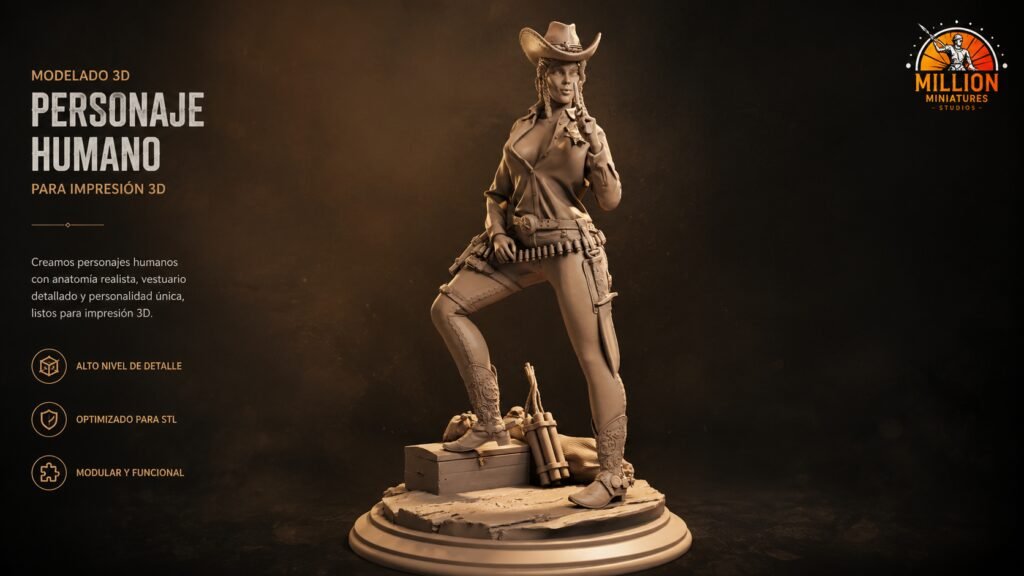
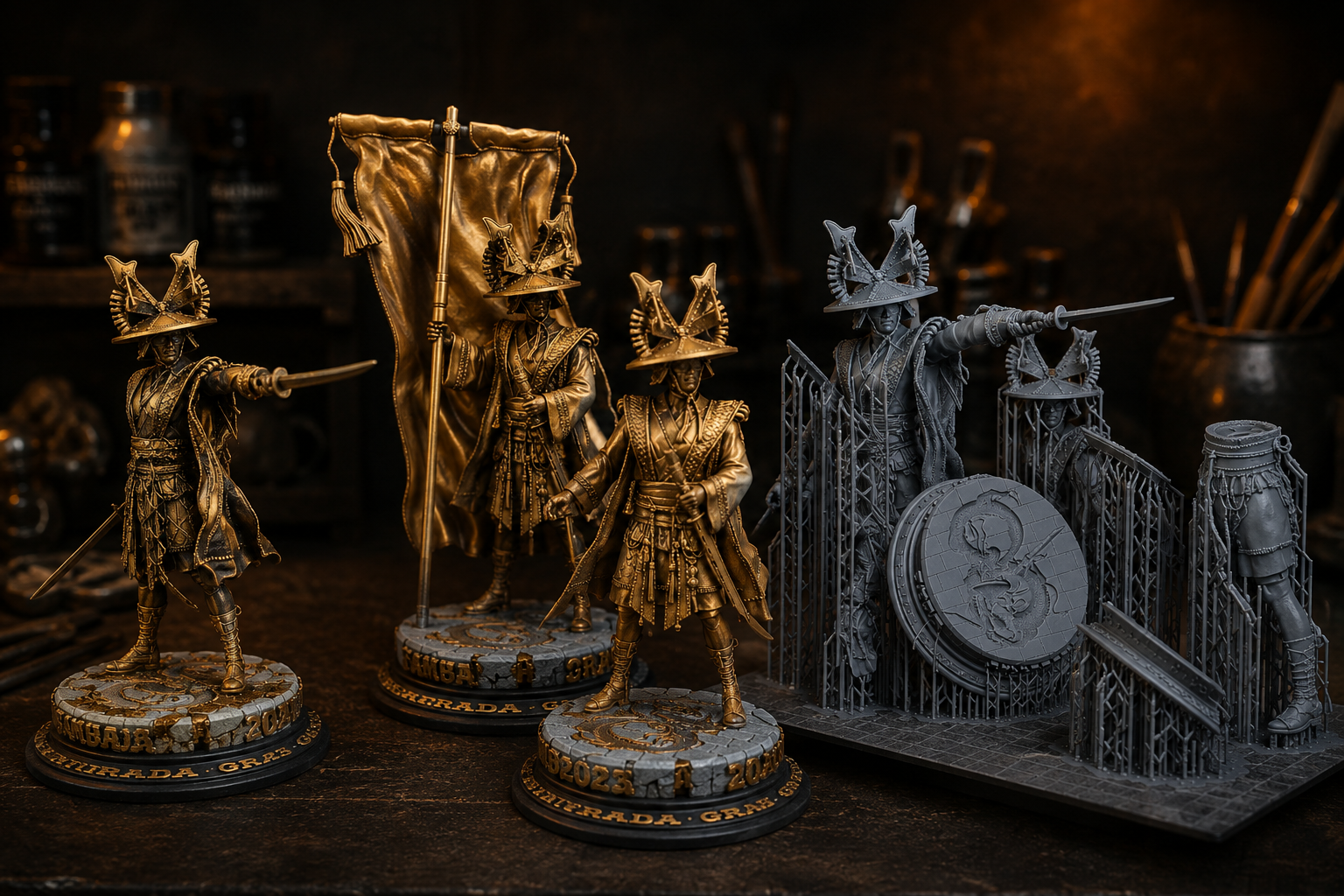
Modeling, the hours in which a digital sculptor makes decisions about anatomy, proportion, expression and fidelity to your idea, is the part that really costs money. Printing, once the file is ready, is largely machine work. This article explains why, and what that means for what you pay in a commission.
3D modeling vs. 3D printing: what each one buys
| Look | 3D Modeling | 3D Printing |
|---|---|---|
| Who does it | A digital sculptor, by hand, decision by decision | A machine, following the finished file |
| What determines the cost | Hours of skilled human work | Machine time + material + post-processing |
| Can it be repeated at no extra cost? | No: every new piece is modeled from scratch | Yes: reprinting the same file is cheap |
| Margin for error | It is corrected before anything is made | It faithfully reproduces errors if the file isn't ready |
| What you really pay for | In a combined commission, the sculptor's hours are usually the biggest part of the budget, not the machine or the resin. | |
That last row is the key to the whole article, and it deserves an honest clarification: we don't publish a fixed "modeling vs. printing" percentage because it varies by piece: anatomical complexity, number of revisions, size. What is consistent in practically every commission is the proportion of effort: the sculptor's hours weigh more in the final budget than machine time, even though the machine is the only thing you can "see" working.
This also explains why the price doesn't drop the same way if you order several copies of the same piece as it does if you order several different pieces: reprinting a file that is already modeled is relatively cheap, but every new design again requires the sculptor's full hours from scratch.
The book and the consultation
A nutrition recipe book costs fifteen or twenty euros. A first consultation with a nutritionist costs quite a bit more. The book isn't bad: it contains real, useful information. But it's generic: it was written once and sold to hundreds of thousands of different people, knowing nothing about your blood work, your physical activity or your specific goals. The consultation, on the other hand, takes that same body of knowledge and applies it specifically to you. You pay for the application, not the information.
The same goes for a self-help psychology book versus a session with a psychologist. The book gives you general techniques and frameworks. The professional listens to your specific situation and decides which of it applies, how and when. Neither format is "the good one". They are different products for different needs.
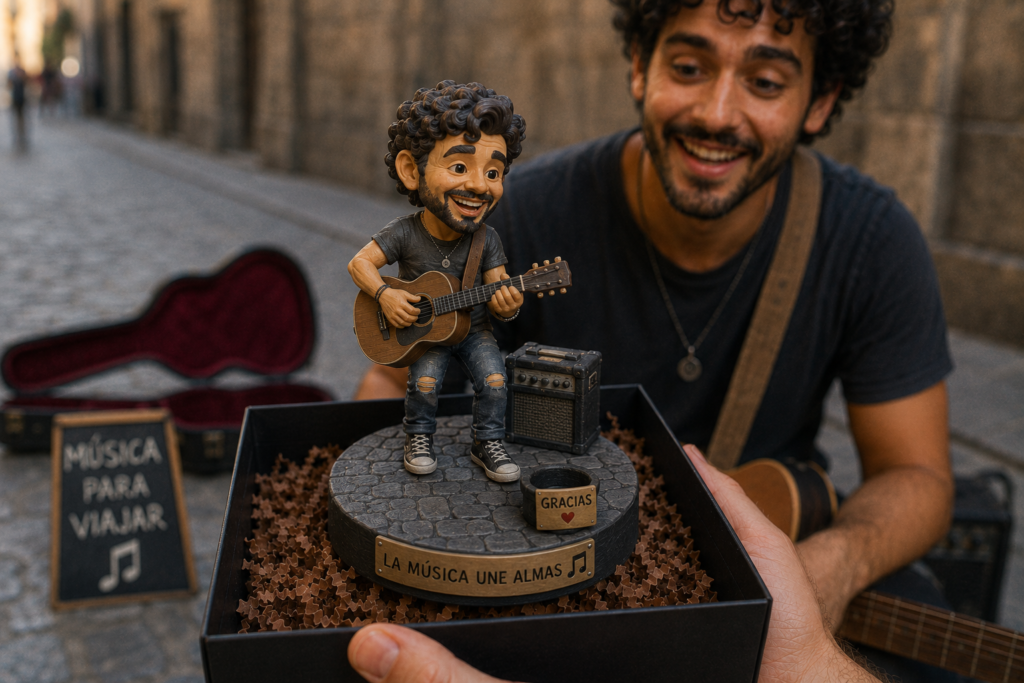
3D modeling is the consultation. Printing is the photocopier that faithfully reproduces what was already decided in that consultation. When a sculptor models your commission, they don't apply a generic template: they look at your photos, adjust proportions that would be wrong in a standard template, correct what looks distorted by perspective in an ordinary photo, and decide on a pose that conveys what you asked for. That is specific, applied work, like the consultation, not like the book.
It is the same idea we developed with the parable of the mechanic and the screw in the article on buying mass-produced versus commissioning: you don't pay for the tap, you pay for knowing where to tap. Here the tap is the printing: quick, mechanical, repeatable. Knowing where to tap is the modeling.
What the modeling hours really include
When we say "sculptor hours" we are not talking about an abstract concept. In a typical commission, those hours cover:
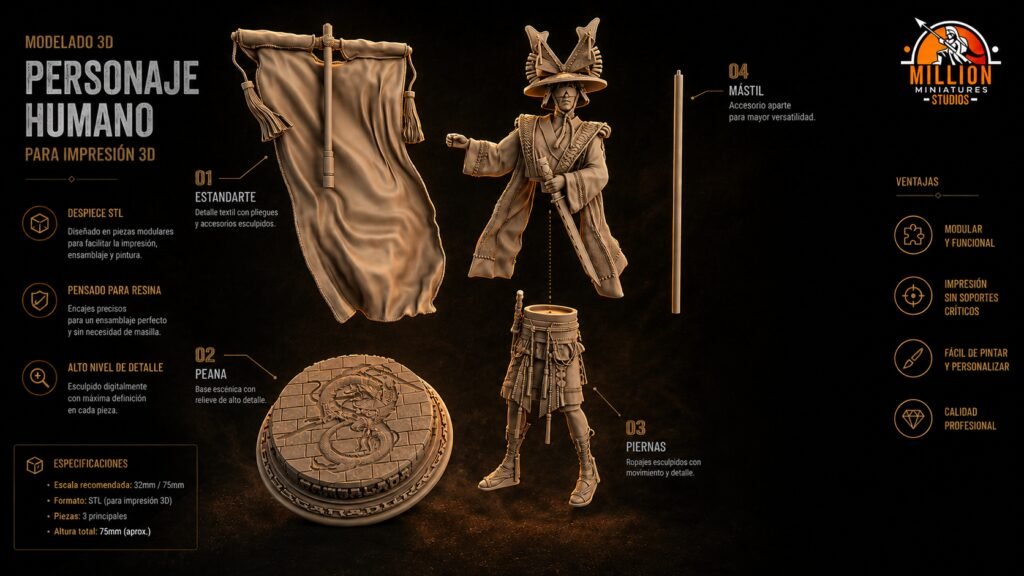
Interpreting the reference: an ordinary photo distorts proportions because of the angle and the camera lens, and correcting that by eye is part of the craft, not something automatic. Building the anatomy or the structure from a neutral base up to the specific likeness you asked for. Review with you before the piece is considered finished, with adjustments based on what you see. And technical preparation of the file so it prints without failures (supports, orientation, internal hollows), which, if skipped, ruins entire pieces at the printing stage.
Why making it smaller doesn't cut the price in half: if you order a piece half the size, the printer uses less material and less machine time, and that part of the cost does go down. But the sculptor still has to decide the same anatomy, the same proportions and the same likeness, just at a smaller scale: the modeling hours barely change. That is why the price adjustment for size is never proportional to volume. It applies to the printing and material part, not to the design part.
If you already have your own STL file (from a download platform, from another sculptor or made by you), you don't need to pay for modeling: you can ask us for the printing service only, which is the cheapest part of the process. The cost only shoots up when someone has to create the design from scratch.
This also explains why a generic STL file bought for a few euros on a download platform is not a substitute for a commission: that file was modeled once and is sold to anyone who wants it, just like a mass-produced figure. It is a legitimate option if a generic design works for you. It simply isn't the same as paying for a few sculptor hours dedicated to your specific idea.
There is a real example that explains it better than any theory: our own miniature collections funded on Kickstarter. There, hundreds of backers split the cost of modeling each figure, and that is why the price per unit comes out low. It's not because modeling is cheap, but because many people are paying for the same sculptor hour. In an individual commission there aren't 500 people splitting that cost with you: your piece pays for it alone. That is the real reason, not an excuse, why a crowdfunded collectible figure and a custom commission have such different prices even though the modeling process is similar.
Tell us what you have and what you need, and we'll tell you exactly which part of the process is required and what it would involve.
Sculpting in ZBrush: Concept to Creature
Manu Herrador · 6,700+ students · 96% rating · Spanish original, English audio available (November 2026)
If you're curious about what digital sculpting really involves, this course teaches it step by step, from concept to finished creature, with collectible miniatures as a reference.
View the course on DomestikaAffiliate link — the course price stays the same for you.
Frequently asked questions
Why does modeling cost more than printing if the printer is the expensive machine?
Can I order just the printing of an STL file I already have?
Does the price go down if I order several copies of the same sculpture?
If I order a smaller size, does the price drop by half?
How much of my budget is sculptor and how much is material?
Why isn't a cheap STL file from the internet the same as a commission?
Your Kickstarter collections are cheaper per figure, so why isn't an individual commission?
Can I see the model before it is printed?
What happens if I don't like the modeling result?
Related articles
Get real commission stories, sculpting processes and exclusive offers before anyone else.